November 9, 2026
Soundtoys Little Plate vs Valhalla Plate: Which Plate Reverb Sits Better on a Clean Surf Guitar
Coffee’s going cold, the Telecaster is still plugged into the interface, and I’ve got two plate reverbs open on the same clean track, A/B-ing them for the fifth time this morning. Soundtoys Little Plate on one insert, Valhalla Plate on another. Same riff, same guitar, same small room. The difference between them isn’t subtle once you stop listening with your eyes.
Here’s the short version before we get into why. Little Plate is the one we reach for when the surf guitar needs to feel like it’s sitting in a real vintage studio, slightly dark, a little haunted. Valhalla Plate is the one when we want the reverb to have a personality we can actually shape. Both are plate reverbs. Both are excellent. They are not the same tool.
What plate reverb actually does to a clean guitar
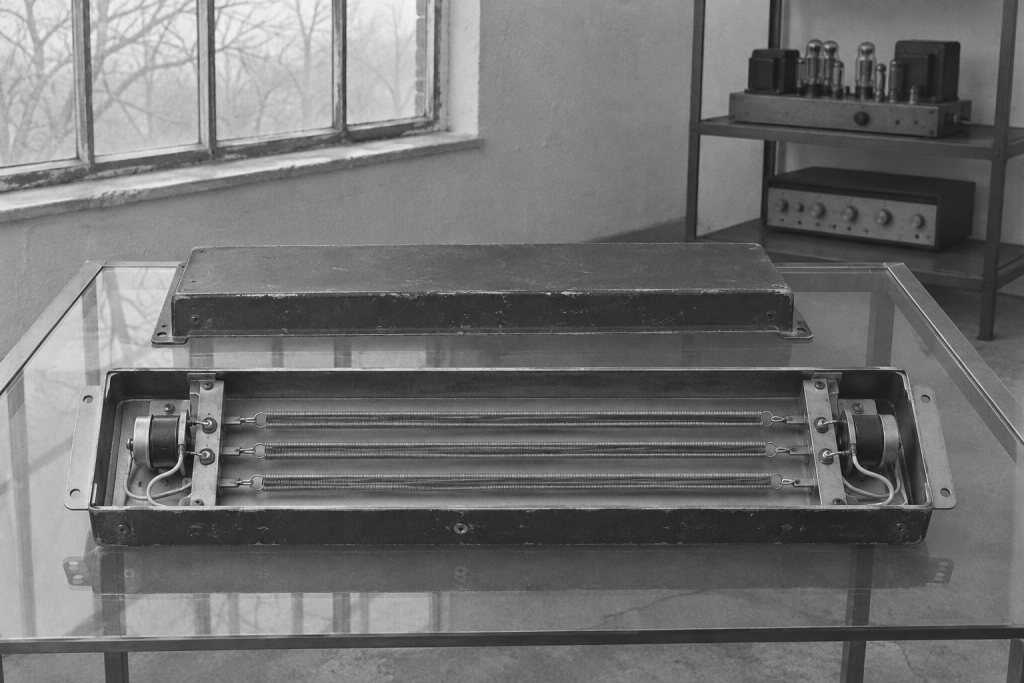
Worth remembering what a plate is before comparing two emulations of it. The original EMT 140 ran a signal through a huge suspended sheet of metal and captured the vibrations, which gave you a dense, smooth bloom that blended into a mix instead of smothering it. Plates are famous for a bright, silvery top end and a tail that decays evenly rather than in obvious discrete echoes. That’s the character surf and instrumental guitar lives on: a wash behind the notes, not a room around them.
Which matters here because a clean surf tone has nowhere to hide. No distortion to mask a muddy reverb, no wall of amps to fill the gaps. If the plate is wrong, you hear every wrong thing about it.
Little Plate: three knobs and a decision
Soundtoys built Little Plate as an EMT 140 emulation, and they kept the interface brutally simple. You get a decay control, a mix, and a low cut, plus a switch to modulate the plate. That’s essentially it. There’s no EQ section, no damping control, no shimmer, no reverb time in seconds. You turn it up, you like it or you don’t.
What surprised us is how much that constraint helps on a clean guitar. The default sound is warm and slightly dark, and the reverb settles behind your playing instead of crowding it. It doesn’t get glassy or brittle on the high strings, which is where a lot of plate emulations fall apart on a Strat or a Jazzmaster through a clean amp. The low cut handles the boom that builds up around the low E and the body of the guitar.
The modulation switch is the sleeper feature. Flip it on and the tail develops a slow, gentle movement that keeps a held chord from sounding static. On surf instrumentals with long sustained notes, that little wobble is the difference between a reverb that sounds alive and one that sounds like a preset.
Where Little Plate frustrates us
Two things. First, that decay knob is not labeled in seconds, so dialing a specific tail length is guesswork. Second, when Soundtoys isn’t running one of their free periods (they’ve handed it out for limited stretches before, and it’s worth watching for), you’re paying around $129 for a plugin with three controls. That’s a real number for a real limitation. We love it anyway, but we won’t pretend the price-to-features math is generous.
Valhalla Plate: more to grab hold of
Sean Costello’s Valhalla plugins have a reputation in the pro audio world that’s outsized for their price, and Plate is the one built specifically for this job. Where Little Plate gives you three knobs, Valhalla Plate gives you a proper set of controls: decay time in actual seconds, a pre-delay, high and low frequency damping, modulation depth and rate, and a handful of different plate “modes” that change the underlying character from a bright modern plate to something darker and more vintage.
That control set is exactly what you want when you’re mixing a clean guitar that has to sit in a specific spot. Pre-delay lets you push the reverb back so the pick attack stays crisp. The damping controls let you tame the top end without losing the plate shimmer entirely. The mode switch is the fun part: it’s genuinely useful to have a darker, thicker plate for a slow ballad and a brighter one for a twangy up-tempo number, all from the same plugin.
It also costs around $50. That is not a typo. Valhalla prices their reverbs aggressively, and Plate is one of the best value-for-money reverbs you can buy.
Where Valhalla Plate frustrates us
It’s more work. On a quick session where you just want a plate on a clean track and you want it now, the extra parameters can pull you into fiddling instead of playing. The stock sound is good but not as instantly “finished” as Little Plate’s. You have to dial it in. And if you’re the kind of player who records guitar and hands the track to someone else, the simplicity of Little Plate is sometimes the better handoff.
Which one on a clean surf guitar
Depends on what you’re chasing. If the reference in your head is a classic instrumental record from the analog era, warm, slightly dark, the reverb melting into the guitar rather than sitting on top of it, Little Plate gets there faster and with more vibe. The modulation switch alone makes it feel like a real plate in a real room.
If you need the plate to be a mix tool, something you shape to fit a dense arrangement, or you want options for different songs from the same plugin, Valhalla Plate wins. The decay in seconds and the damping controls are not luxuries when you’re placing reverb against a bass and a drum kit and a second guitar.
We keep both installed. That’s not a cop-out. Little Plate is the fast, character-first choice, and Valhalla Plate is the precise, flexible one. On our own surf recordings, Little Plate ends up on the lead guitar more often, and Valhalla Plate ends up on the rhythm and the room mics that need shaping. Different jobs, same family of sound.
One practical note about both: plate reverb on a clean guitar wants a low cut somewhere around the low end of the guitar’s range. Neither plugin will save you from a boomy tail on a hollowbody if you don’t cut the lows on the way in. Both give you the tool for it. Use it.
If it came down to choosing a single-surf-guitar home setup and nothing else, Little Plate wins on tone and speed. If one box had to cover clean sounds of all kinds in a little room, Valhalla Plate earns it, for the control and the price. The good news is neither decision is expensive enough to agonize over for long. Turn the amp down, play the riff, listen to the tail. The plate tells you which one it wants to be.